Integrating with Odoo is powerful—but what happens to your integrations when you upgrade to a new version?
This is a question many companies overlook until it’s too late.
The Common Assumption: “Our API Integration Will Just Work”
Many integrations with Odoo are built using JSON-RPC (or XML-RPC). These APIs have historically been stable, and because they expose Odoo’s underlying models and methods, it’s easy to assume:
“If we upgrade Odoo, our integration will continue working.”
In reality, it’s not that simple.
The Reality: Integrations Depend on the Data Model
Odoo integrations—regardless of whether they use JSON-RPC—are tightly coupled to:
- Models (e.g., res.partner, sale.order)
- Field names
- Business logic
- Access rights
When Odoo evolves between versions, these elements often change.
Typical Breaking Changes
- Renamed or removed fields
- Refactored models
- Changed workflows or logic
- Updated permissions or security rules
Even if your API endpoint (/jsonrpc) stays the same, the behavior behind it may not.
A Bigger Shift: JSON-RPC Is Being Phased Out
There’s also a more fundamental change happening:
- JSON-RPC is deprecated in Odoo 19
- It is expected to be removed in Odoo 20
This means that even if your integration survives minor upgrades, it will eventually require a rewrite to align with Odoo’s newer APIs.
Plugin-Based Integrations: Hidden Risks
A common approach is to build integrations as Odoo plugins (custom modules).
While this can feel “native,” it introduces challenges:
- Tight coupling to a specific Odoo version
- Upgrade complexity (modules may break or need refactoring)
- Dependency conflicts with other modules
- Longer testing and deployment cycles
When upgrading Odoo, plugins often need:
- Code rewrites
- Migration scripts
- Regression testing
In some cases, upgrades get delayed entirely because integrations are too fragile.
A Different Approach: Workflow-Based Integration (Bosbec)
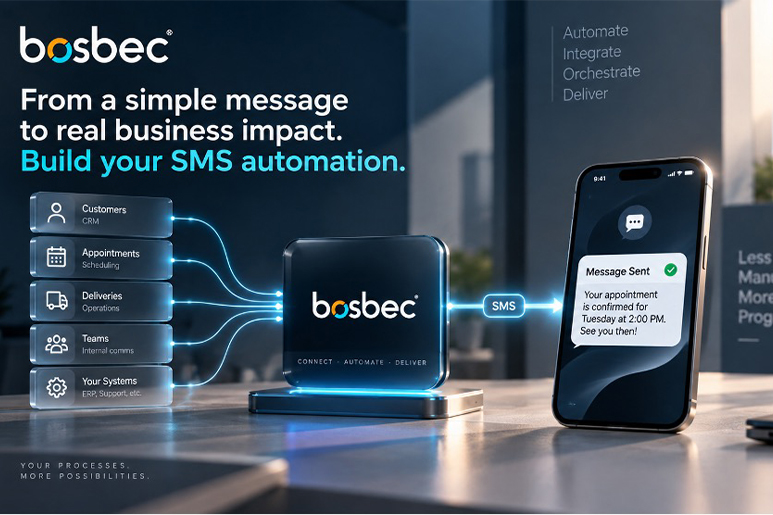
This is where a platform like Bosbec changes the game.
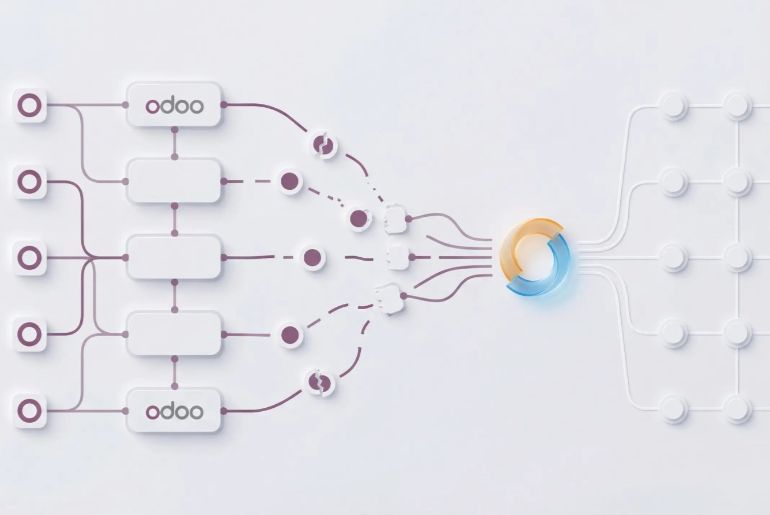
Instead of embedding logic inside Odoo or relying on rigid API calls, Bosbec uses flexible workflows to handle integrations.
Why This Matters
With Bosbec:
- Integrations are decoupled from Odoo’s internal structure
- Changes can be handled in the workflow layer
- No need to rebuild or redeploy plugins
- Faster adaptation to new Odoo versions
Example Scenario
Let’s say:
- A field name changes in Odoo
- A process step is updated
With a plugin:
→ You modify code, test, redeploy, possibly migrate data
With Bosbec:
→ You adjust the workflow configuration
No code rewrite. No downtime-heavy deployments.
Future-Proofing Your Odoo Integrations
If you’re planning long-term with Odoo, consider:
- Avoiding tight coupling to internal models
- Preparing for the shift away from JSON-RPC
- Using middleware or workflow platforms for flexibility
Final Thoughts
Odoo upgrades are inevitable. Broken integrations don’t have to be.
JSON-RPC integrations may work across versions—but they are not future-proof.
Plugin-based approaches can become costly over time.
A workflow-driven approach, like Bosbec, gives you the flexibility to adapt—without starting over.
Are your integrations ready for the next Odoo upgrade?