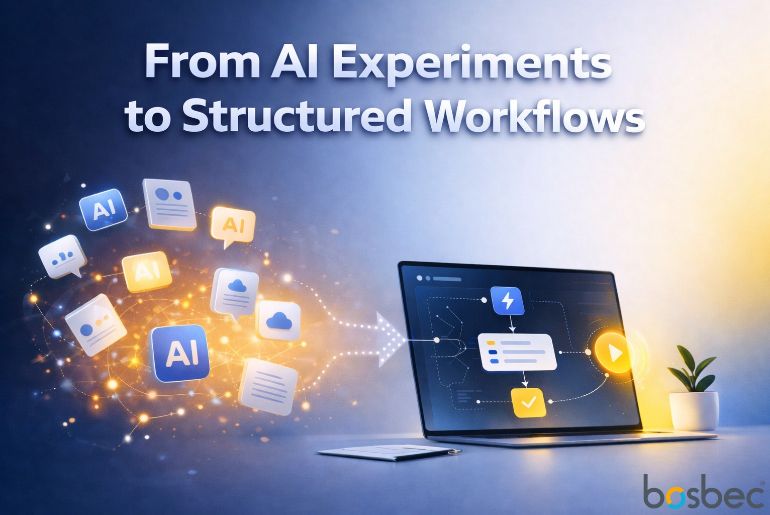
The Problem With Most AI Projects
Artificial intelligence is rapidly entering the workplace.
Teams use AI for writing, customer communication, automation, and data analysis. New tools make it easier than ever to experiment with AI.
But many organizations run into the same issue.
AI initiatives often start strong but rarely become part of everyday operations.
Why?
Because nobody plans the workflow.
AI Experiments vs Operational AI
Using AI tools is easy.
Building AI-driven processes is much harder.
Without structure, AI ends up scattered across different teams. Each department experiments independently, and the results are rarely connected to the systems that actually run the business.
This often leads to:
- disconnected tools
- manual steps between systems
- duplicated work
- unclear responsibilities
AI becomes useful for individuals, but it rarely scales across the organization.
Why Planning Matters
Without planning, AI usage tends to drift. Over time this leads to:
- unclear data flows
- duplicated prompts
- inconsistent results
- lack of governance
- difficulty scaling successful use cases
What starts as experimentation slowly turns into fragmentation.
AI might generate value in isolated situations, but without structure it rarely becomes part of reliable business processes.
AI Also Introduces Security and Data Risks
Another challenge many organizations overlook is security and data governance.
When employees use AI tools independently, sensitive information can easily be exposed unintentionally. Prompts may include internal data, customer information, or operational details that should not be shared outside controlled systems.
Without a structured approach, companies risk:
- sensitive data being sent to external AI services
- unclear ownership of AI-generated decisions
- lack of auditability
- compliance issues with internal policies or regulations
This is why AI usage should be managed as part of a controlled workflow rather than through isolated tools.
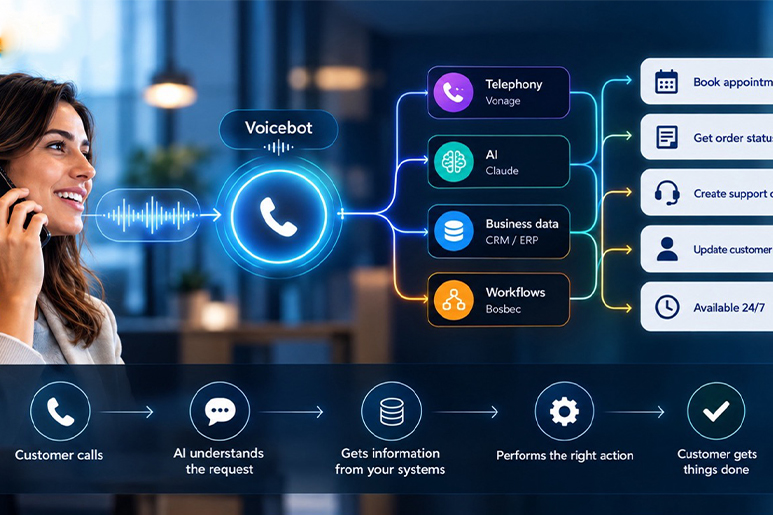
Platforms like Bosbec help organizations handle this by integrating AI capabilities within managed workflows. Instead of sending data manually between tools, AI can be applied within automated processes where data flows, integrations, and access are controlled.
This creates a more secure and scalable way to use AI in business operations.
The Missing Piece: AI Workflow Planning
To create real business value, AI must be integrated into workflows.
Instead of asking “Where can we use AI?”, organizations should ask:
“Where in our workflows can AI improve efficiency, automation, or decision-making?”
When AI becomes part of structured workflows that connect systems and automate processes, it turns into operational infrastructure rather than isolated tools.
Learn How to Plan AI Workflows
If you want to move from AI experiments to structured AI-driven processes, we have created a guide explaining how this can be done.
https://help.bosbec.com/knowledge-base/working-with-bosbec-and-ai-planning/
The guide describes how to design AI workflows and integrate them into operational systems using Bosbec.